

Making STEM real for students in Melbourne
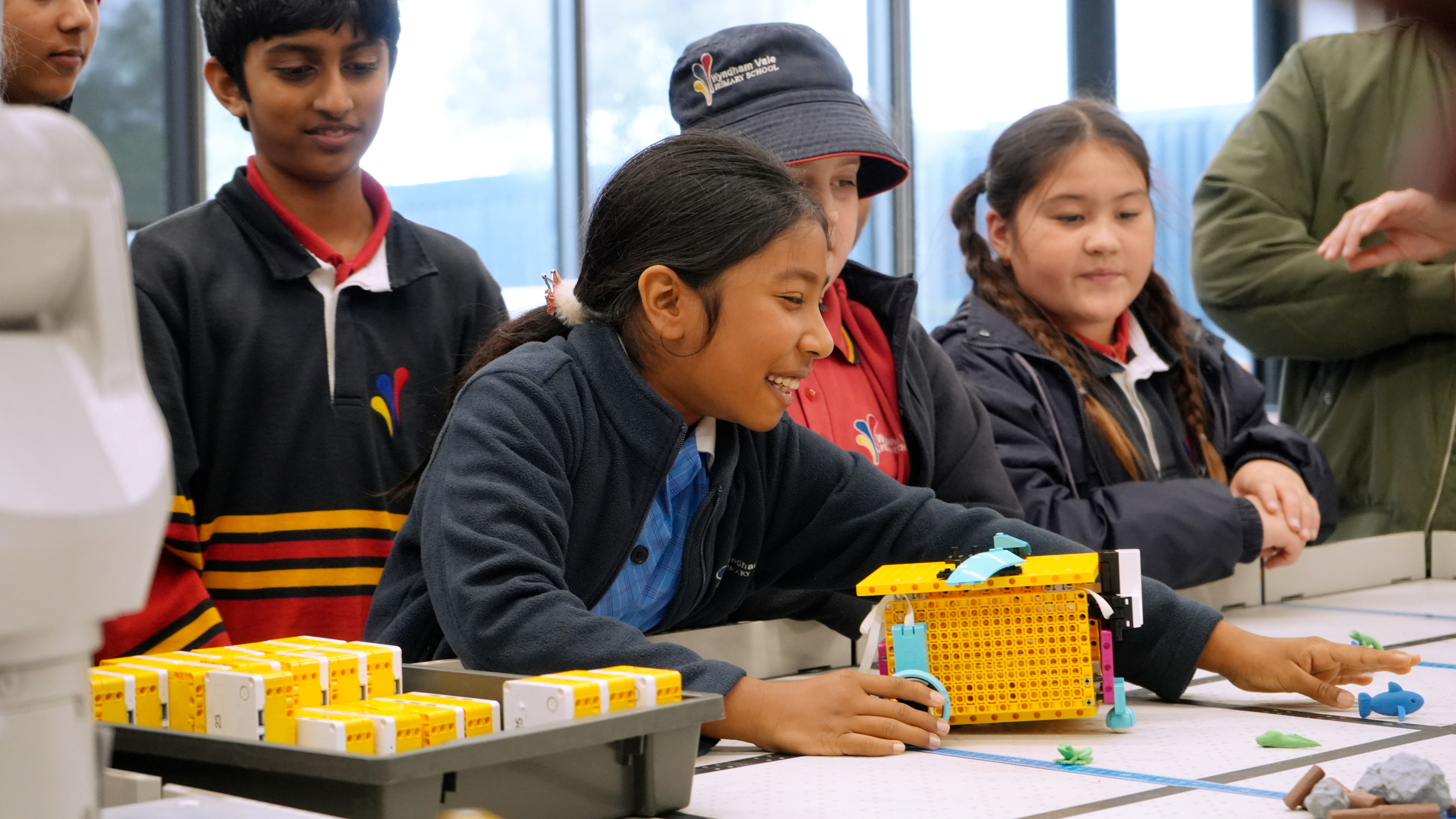
“You can’t be what you can’t see.” This mantra is a binding agent between strategy and culture at Wyndham Tech School, a STEM Centre of Excellence in Melbourne’s outer west, making it a place where secondary students can learn to enjoy STEM, be good at STEM, and aspire for a career in STEM.
Up to 20,000 secondary school students a year take part in programs at Wyndham Tech School. In every session and interaction, the school’s incredible team strives to connect students to their futures by igniting curiosity, engagement, and collaboration through hands-on exploration of advanced technologies.
Course design and activities are closely tied to the critical need for young people to have access to STEM skills that will help them flourish in future careers. The curriculum is co-developed through Wyndham Tech School’s diverse ecosystem of collaborators including teachers and students from 43 secondary schools, government bodies, industry organisations and professionals, Victoria University students and staff, the broader education sector, and local employers.
Wyndham Tech School is funded by the Victorian Government and is hosted by Victoria University, recognising the role of Tech Schools in bridging the gap between education and industry to provide students with access to industry-standard technologies and opportunities for practical learning.
Microsoft has been a key industry collaborator with Wyndham Tech School since 2024, supporting pathways into digital careers, agritech, and renewable energy themed Future of Work programs where students can explore careers and solve real-world case studies using VR, geographic information system (GIS), robotics, and AI tools.
Industry co-creation with the AI Economies program
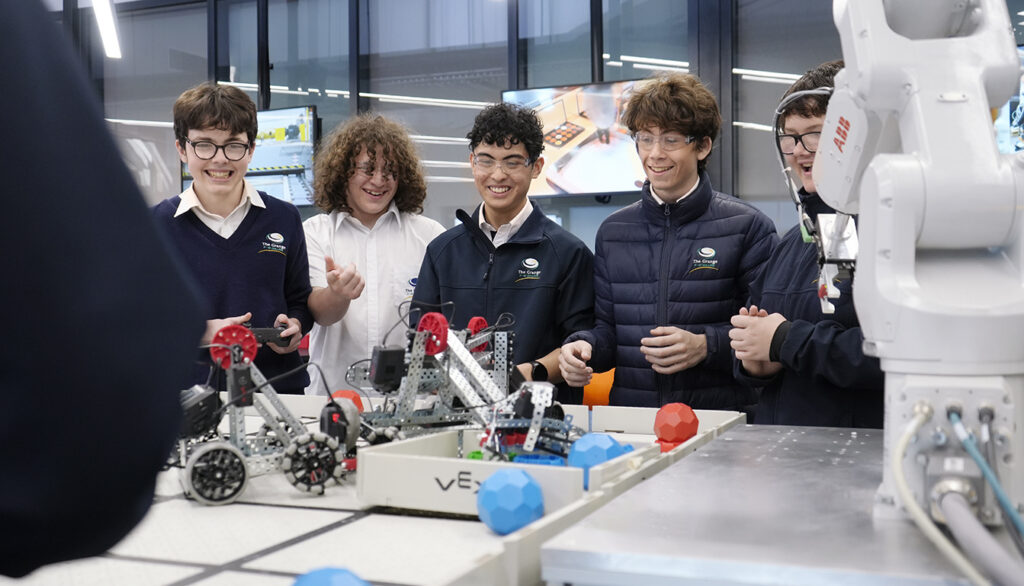
Building on this work, Wyndham Tech School and Microsoft have introduced the AI Economies program, focused on pathways into digital infrastructure, AI, engineering, and clean-energy careers.
Sam Nikolsky, Director of Wyndham Tech School, explains the value of industry collaboration: “Investment by industry into the education system is a really strong case study for what is possible when we work together across sectors. And industry involvement like Microsoft’s helps connect things like cloud and AI to local infrastructure and local jobs.”
This approach reflects Wyndham Tech School’s sustained commitment to building a conduit between local stakeholders and industry. “We want to know the problems industry is trying to solve, what tools and technologies they are using, and what methodologies they are applying to address those challenges,” says Nikolsky. “Then we can bring that through our learning programs and into the consulting we provide to local school and system leaders and teachers to bring industry-driven project-based learning into their classrooms.”
Focus industries include healthcare, transport, building and construction, and agriculture.
“It’s about being super agile and super flexible. We’re not constrained by a lot of things that a traditional schooling environment would be. We can be that research and development for our local schools by designing industry-inspired spaces and having students working in simulated professional environments using professional grade software and hardware. In doing so, we lower the barrier to entry for every student in Melbourne’s outer west and how we work with organisations like Microsoft is helping to provide that equitable access.”
The scale of impact is growing. By the end of 2026, it is expected the collaboration with Microsoft will have granted more than 2,000 additional students the opportunity to take part at Wyndham Tech School. These students would have missed out otherwise. It will also have reached 138 teachers and created an additional 5,357 hours of student programs.
Aligning national, state, and local priorities
“Every job and every sector have been transformed by digital technologies and AI,” observes Nikolsky. The AI Economies program is squarely targeted at this shift.
“We align to what’s coming out of Jobs and Skills Australia, the National AI Plan, and the Victorian AI Plan when we’re speaking with school principals and system leaders in raising the importance of STEM, digital, and engineering related subjects.”
Nikolsky also believes in hyper-local action: “We are an incredibly diverse community and a really aspirational community. We have lots of huge opportunities as well as lots of challenges. The AI Economies program is about levelling that playing field for our young people to make sure they have all the capabilities they’ll need to be successful in any job or any industry that they’ll find themselves in.”
Getting hands-on with the AI Economies program
The AI Economies program is delivered across different work streams.
Systems Engineering and Robotics
Systems Engineering and Robotics is project-based learning including integrating sensors, cloud computing, and automation. Students develop industry-aligned portfolios and progress toward future pathways.
“Year 11 and 12 students can study the Certificate III in Emerging Technologies as part of their Victorian Certificate of Education where they can specialise in wearable technologies, game development, product design, 3D printing, and smart cities while also investigating the impact of technology and creating their own career plans. That then feeds into our TAFE arm, either into cybersecurity or IT. It can also lead to engineering or technology-based degrees in higher education,” explains Nikolsky.
Future of Work
Future of Work covers a breadth of topics including renewable energy, datacentres, cloud systems, AI-enabled industries, and career mapping across the themes of water, energy, food, and health. Students might work with AI drones, podcasting, or virtual reality. They can also design and code their own video game that explores energy and sustainability or build and program a LEGO Spike Prime robot to collect and sort crops to understand how robotics and engineering can make farming safer and more efficient.
Future of Work also delivers capability growth for teachers and has supported the employment of eight undergraduate STEM Program Officers from Victoria University.
“We’re getting very positive feedback. Many of the new STEM Program Officers haven’t been face to face in front of a class of high school students. Teaching them how to fly drones, run a machine learning program, do smart farm maintenance, or work with 3D printers is really building their confidence and skills,” says Nikolsky. “We even want to draw people in from industry to education, because that’s one of the biggest gaps for our schools—teachers with the technical skills and knowledge from IT and engineering related areas.”
Smart City Visualisation
Then there’s Smart City Visualisation, which has seen an upgrade to the school’s projection space to integrate GIS data, First Nations’ environmental knowledge, smart infrastructure, datacentre networks, and weather and topographical modelling. This investment has a halo effect for all programs at Wyndham Tech School and is building understanding of how digital and environmental systems interact across Wyndham and Victoria.
Datacentre pathway
A recent new opportunity for students is the datacentre pathway. In collaboration with Victoria University, Microsoft has launched the first Datacentre Academy in Victoria, helping students develop industry-relevant skills and explore careers supporting Australia’s growing digital infrastructure sector. It builds on Microsoft’s Datacentre Community Pledge and commitment to strengthening local workforce pathways, with Wyndham Tech School playing a key role in developing the program.
“It brings an awareness of the digital infrastructure and the physical side of the cloud and systems engineering that goes into datacentres. It’s a missing stepping stone in that pathway for our young people that are leaving school and may not know where they want to go,” shares Nikolsky.
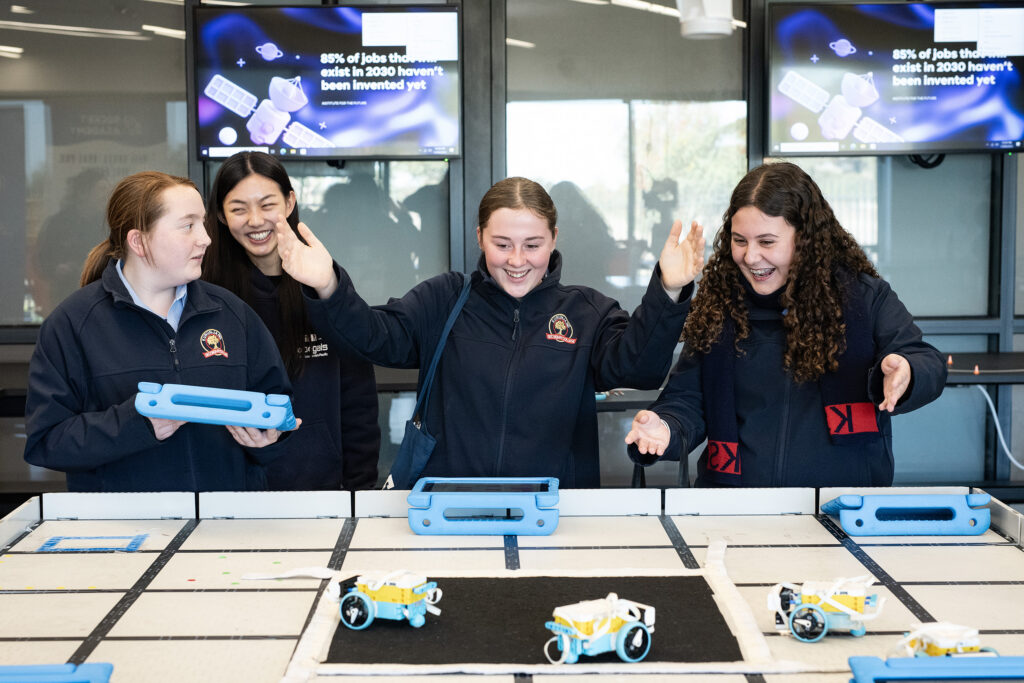
Real impact lies beyond the numbers
Wyndham Tech School’s ecosystem and industry focus drives a highly practical approach, revealing real and lasting impact.
“We like to phrase impact around change—that change element for students around their perception of technology in their lives and in their future careers. The power of being seen for young people is also about helping them to see themselves in different ways,” explains Nikolsky.
The school quantifies this insight through surveys and interviews with the students, and they consistently hear sentiments across these themes:
“I thought STEM was boring.”
“I thought STEM was for boys.”
“I thought STEM wasn’t for me.”
“I might have a career in this space.”
Then there’s the realisation for students that STEM is not just about technical roles, with a broader sphere to consider.
Like students who weren’t aware that nurses had to use technology, or how much problem solving and communication there is in cybersecurity, or the year 9 student who realised she loved project management. “She said, ‘I love being the one that’s organised. I love the spreadsheet!’” recalls Nikolsky, citing it as one of his favourite student discoveries. “It’s all these broader roles in the technology sector—the graphic design roles, the HR roles—and knowing that Microsoft doesn’t just employ programmers.”
Shaping the conditions for future opportunity
The future is a harmonising thread across every pathway, connecting students from where they are now to the potential their future holds. Nikolsky sees digital and technical skills across every learning area in the education sector as essential to building that thread.
“As we consider the future, I would love to see students’ schooling and learning experiences as fully interdisciplinary, hands-on, and built around real-world industry case studies. And making sure they’re having a lot of fun while they’re doing it!”
Wyndham Tech School is a place where that vision is already taking shape. It looks like students working with cybersecurity and data dashboards and managing the school’s smart farm while working at a local nursery. These and many more experiences are bringing students, educators, and industry together to spark curiosity around real-world STEM applications.
“After coming to Wyndham Tech, I realised there are much more aspects of STEM which I can explore in the future. This experience has made me consider doing a STEM related career in the future,” shared a year 7 student from The Grange P-12 College with the Wyndham Tech team.
Pathways students can see. Expanding their dreams of what they can be.