

Frequently asked questions about our datacenters
Understanding datacenters
What is a datacenter and why do we need them?
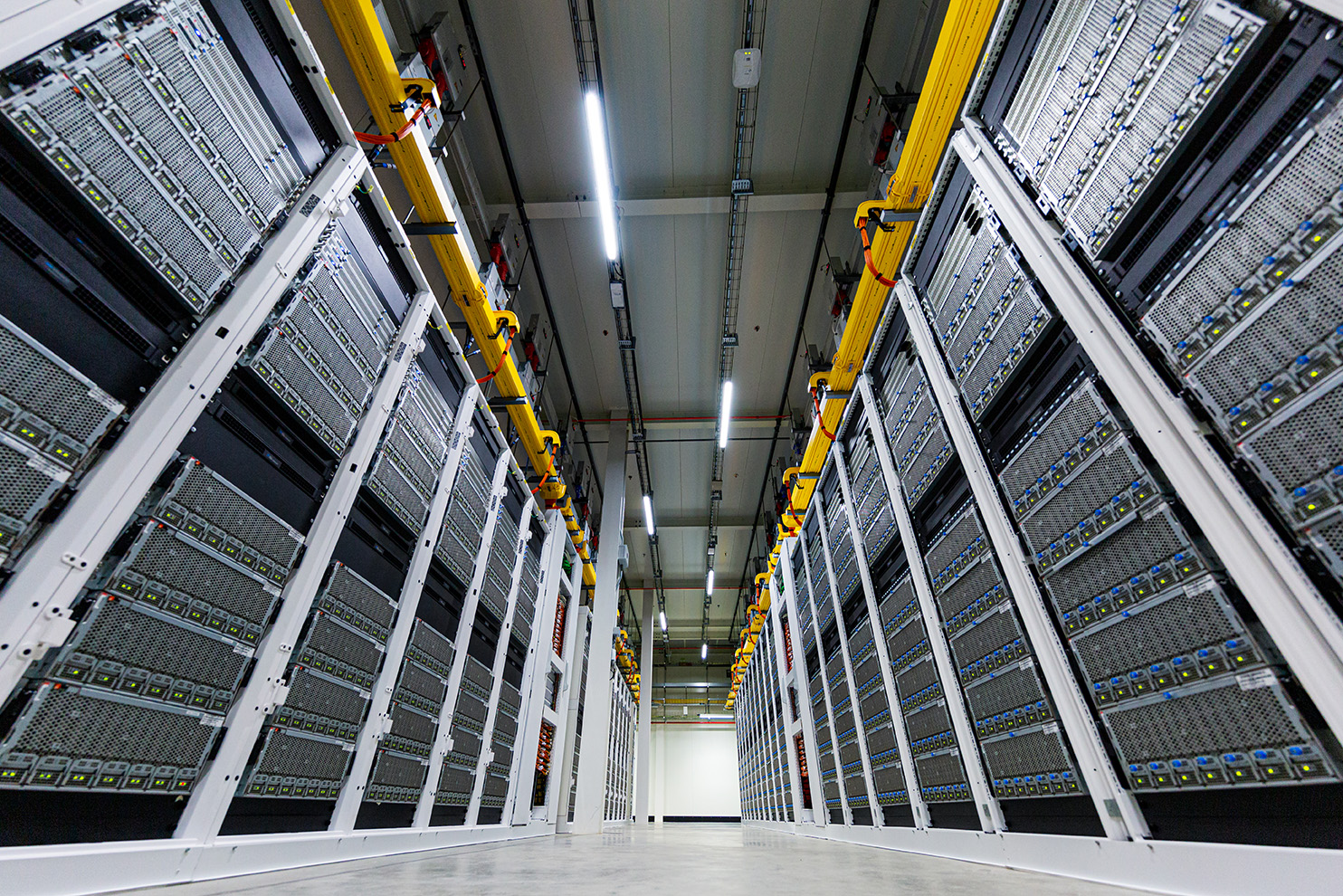
Datacenters provide the physical infrastructure for the technology we depend on at work and in our personal lives. Whenever you open an app on your phone, join a virtual classroom or meeting, snap and save photos, or play a game with your friends online, you are using a datacenter. Local businesses, government, hospitals, and schools rely on datacenters every day to deliver goods and services to you.
Beginning in the United States, we are also committed to building and operating datacenters responsibly through our Community-First Infrastructure initiative, a five-point plan focused on being a good neighbor in the communities where we build, own, and operate datacenters.
Take a virtual step inside a datacenter
How can I learn more about the datacenter in my community?
Explore how Microsoft is making a difference in communities around the world. The fact sheets provide a snapshot of our datacenter presence, community investments, and sustainability efforts across regions.
To view fact sheets in local languages, visit Datacenter operations fact sheets.
How do the Community‑First AI Principles apply to communities outside of the United States?
Microsoft started the initiative in the United States and will expand it globally in ways that reflect each region’s needs, priorities, and traditions.
What impact do datacenters have on local economies?
According to research provided by the US Chamber of Commerce, local datacenter infrastructure supports and stimulates the development of datacenter and construction jobs, improves local infrastructure via tax revenue, and bolsters other technology companies that support these projects. Similar benefits occur outside the US in global communities that host datacenters.
In addition to supporting construction and operations jobs, datacenters can strengthen local communities by contributing to the local tax base that supports public services such as schools, parks, libraries, and first responders.
Through our Community-First AI Infrastructure initiative, we also invest in local workforce training, including Datacenter Academy programs and AI skills opportunities for students, adults, and small businesses in datacenter communities.
How does Microsoft help ensure AI growth supports grid reliability for local communities?
Microsoft is committed to building more efficient AI systems that consume less energy and water. We’re driving ongoing innovation in sustainable infrastructure, renewable energy and grid innovation.
Datacenter sustainability
What are Microsoft’s commitments to sustainability?
- We are committed to being carbon negative by 2030 and by 2050 to remove from the atmosphere an equivalent amount of all the carbon dioxide our company has emitted either directly or by our electricity consumption since we were founded in 1975.
- By 2030, we will also replenish more water than we consume across our global operations, with a focus on water-stressed regions where we work.
- We will achieve 90% diversion of operational waste at owned datacenters and campuses, and 75% diversion for all construction and demolition projects, by 2030.
- Learn more in our 2024 Environmental Sustainability Report.
How much water is required to cool datacenters?
We continue to design datacenters to use as little water as possible, and we work with local utilities to ensure our operations do not strain community water supplies.
Across our owned datacenter fleet, we are committed to improving water-use intensity by 40 percent by 2030, and we are deploying new designs that use closed-loop cooling systems that can significantly reduce water use, including designs that no longer require potable water for cooling in certain locations.
We also commit to replenishing more water than we withdraw, and to increasing transparency by publishing water-use data by datacenter region in the United States and reporting progress on replenishment.
To learn more about our cooling methods, visit Understanding water use at Microsoft datacenters
What is Microsoft’s approach in water-stressed regions?
Our cooling strategy is tailored to local conditions. For new datacenters in water-stressed regions, we prioritize technologies that use little or no water, such as air-cooled chillers and outside-air cooling. We partner with utilities from day one to map out water, wastewater, and pressure needs, and we fully fund the infrastructure required for growth, if needed, ensuring local water systems are resilient
Do you put additives/chemicals in the water?
Datacenter cooling water is typically not treated with any chemicals or additives. When quality of the available water is not adequate for use in cooling systems, water treatment is pursued in the same way municipal drinking water is treated to remove excessive hardness or to prevent harmful bacterial growth.
How is water discharged from datacenter?
Wastewater is typically discharged to the municipal sewer system in accordance with local environmental regulations.
Do datacenters use renewable energy?
Renewable energy is energy that is collected from renewable resources, which are naturally replenished on a human time scale—such as solar energy, wind power, hydroelectric power, geothermal energy, tidal power, and biofuels. By 2025, the Microsoft cloud will shift to 100 percent supply of renewable energy, meaning that we will have power purchase agreements (PPA) for green energy contracted for 100 percent of carbon-emitting electricity consumed by all our datacenters, buildings, and campuses.
Watch this video to learn more about datacenters and renewable energy
Why do datacenters have generators?
Datacenters use fossil fuel generators for back-up power during the rare emergency. Microsoft is constantly pursuing opportunities to shift to carbon free backup generation, including through the eventual use of batteries. As this technology continues to mature, the goal is to extend the duration of the batteries—from a few minutes to several hours. The long duration batteries have the potential to be a replacement for diesel generators.
Do datacenters generate waste?
Microsoft’s Circular Centers enable us to reuse and repurpose decommissioned cloud computing hardware from our datacenters to find new life in schools, as resources for skills training programs, and much more. The goal of our Circular Center program is to reuse 90 percent of our cloud computing hardware assets by 2025.
Globally, Microsoft datacenters reuse 78 percent of our end-of-life assets and components; the remaining 22 percent of materials are recycled. Additionally, Microsoft is conducting research and development to improve waste diversion by determining new recycling solutions for used air filters and fiber optic cables.
Working at a datacenter
How many people will work at the datacenter?
Microsoft datacenters represent a capital-intensive investment and long-term commitment to the community. Typically, when the first building is operational, we hire about 50 full-time employees and vendors. As we build out the subsequent buildings, additional staff is hired and generally we employ 50 full time and vendors per building.
In addition to the on-site roles that support each building, datacenter construction can support thousands of jobs during the construction phase, and datacenter operations can grow to hundreds of roles as a multi-building campus expands. Through our Community-First AI Infrastructure initiative, we also invest in local workforce pathways so residents can access these opportunities.
What types of jobs will be available at the datacenter, and how do you apply?
Microsoft datacenters create family-wage operations and construction jobs, here are a couple of our most common roles inside the datacenter:
- Microsoft jobs at a glance: Datacenter Critical Environment Technician
- Microsoft jobs at a glance: Datacenter Technician
For the full list of positions, visit Microsoft jobs in your community or to build the skills needed to work at the datacenter, check out our Datacenter Academy
In addition to hiring for roles in datacenter operations, Microsoft is expanding workforce pathways so more local residents can train for both construction and ongoing operations roles. In the United States and Canada, this [CL1] includes a new partnership with North America’s Building Trades Unions (NABTU) to strengthen apprenticeship and training programs in regions where datacenters are being built, and continued expansion of our Datacenter Academy program with local community colleges and vocational schools.
Living near a datacenter
What do datacenter campuses look like?
Each site has a unique design but typically datacenter buildings resemble windowless warehouses. Most often, we build several datacenter buildings per datacenter campus location. Microsoft uses a standard design template with fencing around the perimeter for security and safety purposes. Where possible we strive to include vegetative screening.
Do datacenter campuses create a lot of traffic?
Unlike distribution warehouses, datacenters do not have around the clock truck traffic coming and going but might receive occasional deliveries of machinery, parts, office supplies, and other equipment. With datacenters employing approximately 50 people per building, across a 24/7 period, the parking lot traffic is also minimal. Employees will arrive and depart the datacenter on staggered schedules, so there will not be traffic from large shift changes.
Do datacenters create noise?
Microsoft datacenters typically have four sources of sound: servers, employee vehicles and occasional truck deliveries, backup generators, and cooling equipment. Typically, building setbacks exist, creating distance between backup generators and making the sound volume insignificant.
Find out more about how we minimize datacenter sounds.
What kind of exterior lighting is used at datacenters?
Microsoft datacenters include perimeter fencing and 24-hour exterior lighting to protect our employees and operations. At our datacenter properties, artificial exterior lighting is strategically placed both around the buildings, and in places such as parking lots, roadways, sidewalks, and perimeter fencing. Lighting placement and fixtures are designed in a thoughtful way, taking into consideration human safety, visual comfort and building aesthetics and identification, while being respectful of the surroundings.
Learn more about our lighting best practices.
Are there electric and magnetic field health risks from the datacenter substation?
Anything that uses electric power emits electric and magnetic fields, including everyday household items like lamps, wiring, stoves, hairdryers, and microwaves.
Energy suppliers regularly receive these sort of questions related to substations and power lines and encourage community members to review reputable online studies from sources like the World Health Organization.
How does Microsoft mitigate construction impacts on the community?
Microsoft’s general contractors are responsible for being compliant with local noise ordinances and specifications outlined during the permitting process. Once work hours are known, we use the Microsoft in Your Community blog to inform the community of the general contractor’s permitted work hours as part of our construction overview. When there is a need for traffic control, our general contractors use traffic marshals to ensure the safety of the community and keep traffic moving.