

Frequently asked questions about our datacenters
Understanding datacenters
What is a datacenter and why do we need them?
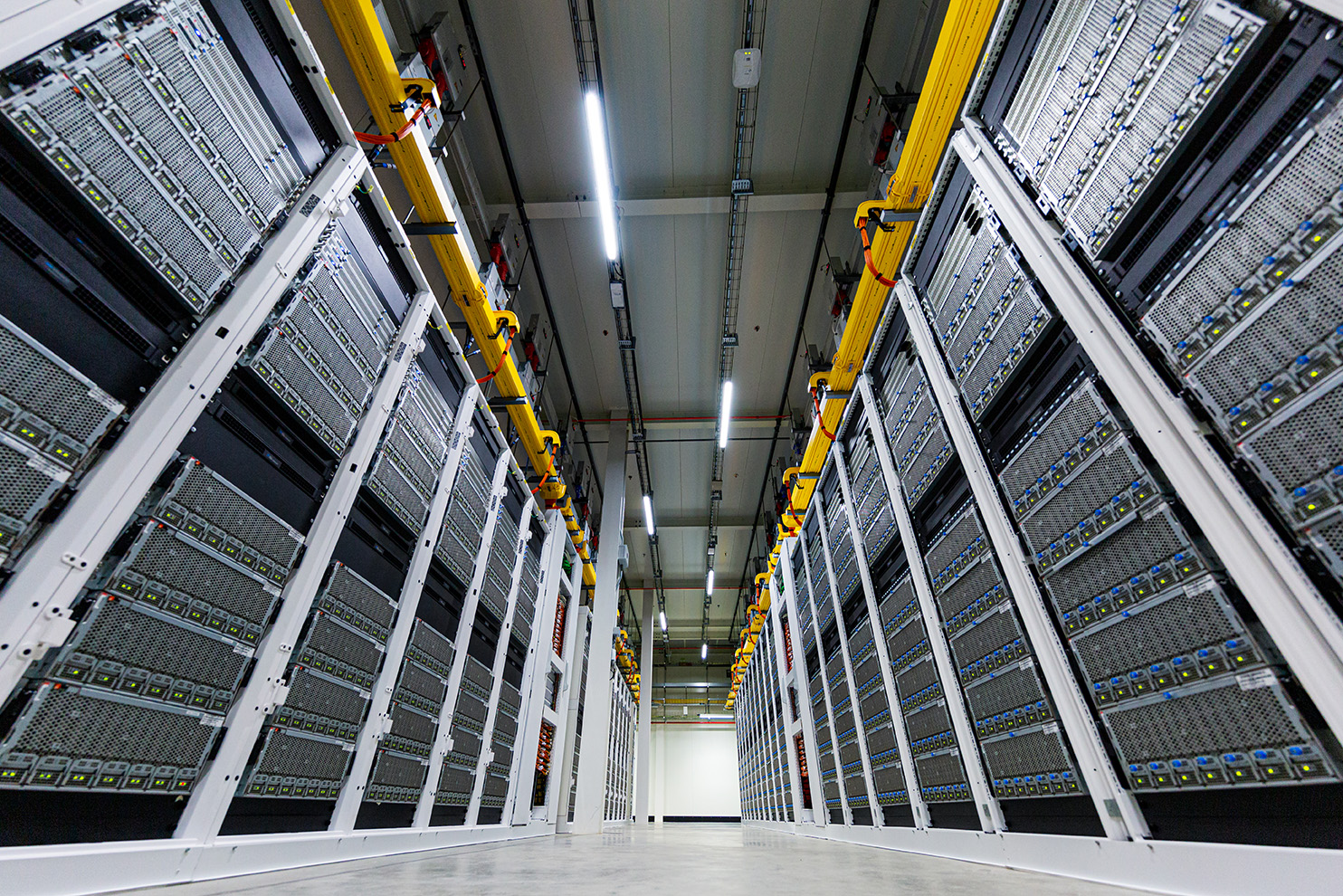
Datacenters provide the physical infrastructure for the technology we depend on at work and in our personal lives. Whenever you open an app on your phone, join a virtual classroom or meeting, snap and save photos, or play a game with your friends online, you are using a datacenter. Local businesses, government, hospitals, and schools rely on datacenters every day to deliver goods and services to you.
Beginning in the United States, we are also committed to building and operating datacenters responsibly through our Community-First Infrastructure initiative, a five-point plan focused on being a good neighbor in the communities where we build, own, and operate datacenters.
Take a virtual step inside a datacenter
How can I learn more about the datacenter in my community?
Explore how Microsoft is making a difference in communities around the world. The fact sheets provide a snapshot of our datacenter presence, community investments, and sustainability efforts across regions.
To view fact sheets in local languages, visit Datacenter operations fact sheets.
How do the Community‑First AI Principles apply to communities outside of the United States?
Microsoft started the initiative in the United States and will expand it globally in ways that reflect each region’s needs, priorities, and traditions.
What impact do datacenters have on local economies?
According to research provided by the US Chamber of Commerce, local datacenter infrastructure supports and stimulates the development of datacenter and construction jobs, improves local infrastructure via tax revenue, and bolsters other technology companies that support these projects. Similar benefits occur outside the US in global communities that host datacenters.
In addition to supporting construction and operations jobs, datacenters can strengthen local communities by contributing to the local tax base that supports public services such as schools, parks, libraries, and first responders.
Through our Community-First AI Infrastructure initiative, we also invest in local workforce training, including Datacenter Academy programs and AI skills opportunities for students, adults, and small businesses in datacenter communities.
How does Microsoft help ensure AI growth supports grid reliability for local communities?
Microsoft is committed to building more efficient AI systems that consume less energy and water. We’re driving ongoing innovation in sustainable infrastructure, renewable energy and grid innovation.
Datacenter sustainability
What are Microsoft’s commitments to sustainability?
- We are committed to being carbon negative by 2030 and by 2050 to remove from the atmosphere an equivalent amount of all the carbon dioxide our company has emitted either directly or by our electricity consumption since we were founded in 1975.
- By 2030, we will also replenish more water than we consume across our global operations, with a focus on water-stressed regions where we work.
- We will achieve 90% diversion of operational waste at owned datacenters and campuses, and 75% diversion for all construction and demolition projects, by 2030.
- Learn more in our 2024 Environmental Sustainability Report.
How much water is required to cool datacenters?
We continue to design datacenters to use as little water as possible, and we work with local utilities to ensure our operations do not strain community water supplies.
Across our owned datacenter fleet, we are committed to improving water-use intensity by 40 percent by 2030, and we are deploying new designs that use closed-loop cooling systems that can significantly reduce water use, including designs that no longer require potable water for cooling in certain locations.
We also commit to replenishing more water than we withdraw, and to increasing transparency by publishing water-use data by datacenter region in the United States and reporting progress on replenishment.
To learn more about our cooling methods, visit Understanding water use at Microsoft datacenters
What is Microsoft’s approach in water-stressed regions?
Our cooling strategy is tailored to local conditions. For new datacenters in water-stressed regions, we prioritize technologies that use little or no water, such as air-cooled chillers and outside-air cooling. We partner with utilities from day one to map out water, wastewater, and pressure needs, and we fully fund the infrastructure required for growth, if needed, ensuring local water systems are resilient
Do you put additives/chemicals in the water?
Datacenter cooling water is typically not treated with any chemicals or additives. When quality of the available water is not adequate for use in cooling systems, water treatment is pursued in the same way municipal drinking water is treated to remove excessive hardness or to prevent harmful bacterial growth.
How is water discharged from datacenter?
Wastewater is typically discharged to the municipal sewer system in accordance with local environmental regulations.
Do datacenters use renewable energy?
Renewable energy is energy that is collected from renewable resources, which are naturally replenished on a human time scale—such as solar energy, wind power, hydroelectric power, geothermal energy, tidal power, and biofuels. By 2025, the Microsoft cloud will shift to 100 percent supply of renewable energy, meaning that we will have power purchase agreements (PPA) for green energy contracted for 100 percent of carbon-emitting electricity consumed by all our datacenters, buildings, and campuses.
Watch this video to learn more about datacenters and renewable energy
Do data centers generate erratic voltage or power variations that can destabilize the grid?
Microsoft datacenters generally use electricity in a stable and predictable way. Unlike some industries that turn large machines on and off and create sudden spikes in demand, datacenters run computers continuously with very small changes in power use. They also follow strict rules from utilities to prevent issues like voltage swings or electrical noise, and they use equipment that helps smooth and stabilize their power needs.
Why do datacenters have generators?
Datacenters use fossil fuel generators for back-up power during the rare emergency. Microsoft is constantly pursuing opportunities to shift to carbon free backup generation, including through the eventual use of batteries. As this technology continues to mature, the goal is to extend the duration of the batteries—from a few minutes to several hours. The long duration batteries have the potential to be a replacement for diesel generators.
Do datacenters generate waste?
Microsoft’s Circular Centers enable us to reuse and repurpose decommissioned cloud computing hardware from our datacenters to find new life in schools, as resources for skills training programs, and much more. The goal of our Circular Center program is to reuse 90 percent of our cloud computing hardware assets by 2025.
Globally, Microsoft datacenters reuse 78 percent of our end-of-life assets and components; the remaining 22 percent of materials are recycled. Additionally, Microsoft is conducting research and development to improve waste diversion by determining new recycling solutions for used air filters and fiber optic cables.
Working at a datacenter
How many people will work at the datacenter?
Microsoft datacenters represent a capital-intensive investment and long-term commitment to the community. Typically, when the first building is operational, we hire about 50 full-time employees and vendors. As we build out the subsequent buildings, additional staff is hired and generally we employ 50 full time and vendors per building.
In addition to the on-site roles that support each building, datacenter construction can support thousands of jobs during the construction phase, and datacenter operations can grow to hundreds of roles as a multi-building campus expands. Through our Community-First AI Infrastructure initiative, we also invest in local workforce pathways so residents can access these opportunities.
What types of jobs will be available at the datacenter, and how do you apply?
Microsoft datacenters create family-wage operations and construction jobs, here are a couple of our most common roles inside the datacenter:
- Microsoft jobs at a glance: Datacenter Critical Environment Technician
- Microsoft jobs at a glance: Datacenter Technician
For the full list of positions, visit Microsoft jobs in your community or to build the skills needed to work at the datacenter, check out our Datacenter Academy
In addition to hiring for roles in datacenter operations, Microsoft is expanding workforce pathways so more local residents can train for both construction and ongoing operations roles. In the United States and Canada, this includes a new partnership with North America’s Building Trades Unions (NABTU) to strengthen apprenticeship and training programs in regions where datacenters are being built, and continued expansion of our Datacenter Academy program with local community colleges and vocational schools.
Living near a datacenter
What do datacenter campuses look like?
Each site has a unique design but typically datacenter buildings resemble windowless warehouses. Most often, we build several datacenter buildings per datacenter campus location. Microsoft uses a standard design template with fencing around the perimeter for security and safety purposes. Where possible we strive to include vegetative screening.
Do datacenter campuses create a lot of traffic?
Unlike distribution warehouses, datacenters do not have around the clock truck traffic coming and going but might receive occasional deliveries of machinery, parts, office supplies, and other equipment. With datacenters employing approximately 50 people per building, across a 24/7 period, the parking lot traffic is also minimal. Employees will arrive and depart the datacenter on staggered schedules, so there will not be traffic from large shift changes.
Do datacenters create noise?
Microsoft datacenters typically have four sources of sound: servers, employee vehicles and occasional truck deliveries, backup generators, and cooling equipment. Typically, building setbacks exist, creating distance between backup generators and making the sound volume insignificant.
Find out more about how we minimize datacenter sounds.
What kind of exterior lighting is used at datacenters?
Microsoft datacenters include perimeter fencing and 24-hour exterior lighting to protect our employees and operations. At our datacenter properties, artificial exterior lighting is strategically placed both around the buildings, and in places such as parking lots, roadways, sidewalks, and perimeter fencing. Lighting placement and fixtures are designed in a thoughtful way, taking into consideration human safety, visual comfort and building aesthetics and identification, while being respectful of the surroundings.
Learn more about our lighting best practices.
How does Microsoft mitigate construction impacts on the community?
Microsoft’s general contractors are responsible for being compliant with local noise ordinances and specifications outlined during the permitting process. Once work hours are known, we use the Microsoft in Your Community blog to inform the community of the general contractor’s permitted work hours as part of our construction overview. When there is a need for traffic control, our general contractors use traffic marshals to ensure the safety of the community and keep traffic moving.
Learn more about Microsoft datacenters
Health and Safety
Will Microsoft datacenters negatively impact my health?
No, there is no evidence that datacenters built to local codes and ordinances present health risks. During all phases of the datacenter lifecycle—from construction to operations—Microsoft meets, or exceeds, local, state, and federal health, safety, and environmental regulations.
Are datacenters linked to increased cancer rates or miscarriages?
There is no evidence that living near a datacenter causes or increases the risk of cancer, miscarriages, or other health issues. Datacenters primarily consist of electrical systems and cooling equipment, and during normal operation they do not produce toxic emissions or hazardous radiation that would pose a health risk. In rare emergency situations when backup generators are in use, emissions levels are closely monitored to ensure that we comply with all federal, state, and local air quality regulations.
Will hosting a datacenter pollute our water supply?
Datacenters carefully manage their cooling water to help protect local water quality and public health. Federal, state, and local governments have established regulations that apply to water discharges. We manage and monitor our operations and discharges to meet these requirements, and we work with local utilities to help ensure compliance. Microsoft also designs its cooling water systems and datacenters to prevent chemicals from being released to the environment or local sewers. Microsoft does not add PFAS (so-called “forever”) chemicals to its datacenter cooling operations. Together, these measures provide multiple layers of water quality protection designed to prevent harmful pollutants from entering community waters.
What will you do with water when the closed-loop system is flushed?
During initial commissioning, the closed-loop system is filled and flushed using standard municipal water—a one-time activity coordinated directly with the local utility to help ensure any discharge to the sewer system is planned, permitted, and in accordance with local regulations and ordinances. Once the system is placed into service, the water remains sealed within the closed loop.
What happens to the propylene glycol (PG) from the closed-loop system if there is a pipe leak or spill?
Modern liquid-cooled computing systems use multiple layers of protection to quickly identify and respond to liquid leaks to prevent or minimize potential releases, helping protect people, equipment, and the surrounding environment. Leak detection and automatic shutdown systems are a key part of responsible liquid cooling design, supporting safe, reliable, and resilient operation in high-performance computing environments. In the unlikely event of a leak or spill, datacenters have established spill response and cleanup procedures in place, including trained personnel, readily available spill kits, and planned disposal procedures to help ensure liquids are contained, cleaned up promptly, and managed in an environmentally responsible way.
Are there health risks associated with groundwater near datacenters?
Datacenters are subject to environmental protections that require the safe handling of water and chemicals, along with routine monitoring. Microsoft takes measures to ensure compliance with applicable regulatory standards related to groundwater. Based on how Microsoft closed-loop cooled datacenters are designed, there are no releases from datacenter operations that enter groundwater.
I live next to the datacenter and have a residential well. What will happen to my well water during construction?
We recognize that neighbors may have questions or concerns—and we want to hear from you. We maintain an open line of communication before and throughout construction, and any well-related concerns raised by nearby residents will be taken seriously and addressed directly. If you have a question or concern at any point, please don’t hesitate to reach out to our project team.
Why does Microsoft use diesel generators instead of natural gas or other fuels?
Backup generators are for rare emergencies, testing is much less than 24 hours per year, and diesel is currently the most practical fuel option at required scale because of size needs and limited natural gas availability.
Do the generators create air pollution, and how is that regulated?
Microsoft receives air permits for stationary backup generators as required by the Clean Air Act and corresponding state implementation plans. Generator use is very infrequent, intended for emergencies rather than primary power, and testing/maintenance runs are much less than 24 hours per year.
Microsoft reduces potential health risks by limiting generator use and applying permit-based controls. Generators are permitted and regulated, use modern engines with emission controls, and are managed through setback distances and operating limits.
How often are generators tested, and when does testing occur?
Testing/maintenance runs are much less than 24 hours per year and are typically scheduled during daytime hours. Generators are enclosed in sound-attenuating housings and shielded where needed.
Do cooling systems create a heat-island effect?
Infrastructure development of any type such as shopping centers, roads, and parking lots create heat due to large roofs and paved surfaces.
Datacenters are not unique, other than they produce heat from computing equipment, which is managed through engineered cooling systems.
The extent to which any individual facility affects temperatures depends on site-specific factors such as design, landscaping, cooling technology, and local weather conditions
Do Microsoft datacenters create light pollution that poses health risks?
Microsoft datacenters use carefully designed exterior lighting that prioritizes worker safety without causing light pollution. We are mindful that community members value dark night skies and minimal intrusion from bright lights at night. Our approach to lighting helps ensure the datacenter’s presence at night is unobtrusive and does not affect health.
What happens if substation equipment fails?
If substation equipment fails, protective systems automatically shut off or isolate the affected equipment to prevent damage and help keep people safe. Substations are designed with multiple layers of protection and redundancy. They are engineered so that credible equipment failures do not pose a health or safety risk to surrounding communities. Electrical protection systems, physical separation, and emergency response procedures are intended to prevent off-site impacts.
Do datacenters produce infrasound that can affect people’s health?
Infrasound is not unusual; it is a naturally occurring part of our environment and is produced by many common sources, including wind, ocean waves, weather systems, traffic, individual vehicles, home heating and cooling systems, and household appliances such as washing machines, ceiling fans, treadmills, and dishwashers.
Like many commercial and industrial facilities, datacenters can generate some low-frequency sound, including frequencies below the typical range of human hearing (generally defined as below 20 Hz).
These sounds are produced by common equipment such as fans, air handlers, pumps, and electrical systems, which are not unique to datacenters and can be found in hospitals, malls, and office parks.
The resulting infrasound levels are generally very low, consistent with common background environmental sources, and are typically not perceptible to the human ear or body under normal conditions.
Independent reviews by scientific researchers, public health experts, and government agencies have not found evidence that low-frequency sound or infrasound causes adverse health effects at levels typically found in communities..
Will hosting a datacenter increase security or attack risks?
Ensuring safety is a top concern for Microsoft. Our datacenters are designed and operated to be safe and secure for the communities where they’re located. We work closely with local officials to help ensure our facilities meet regulatory and safety requirements, and we’re thoughtful about what details we share publicly due to security and compliance considerations.